
Keynote Speaker1
Distinguished Professor Kashem Muttaqi, FIEEE, FIET, FIEAust
Director, ARC Training Centre in Energy Technologies for Future Grids
Distinguished Professor and Discipline Leader – Electrical Engineering School of Electrical, Computer and Telecommunications Engineering
University of Wollongong, New South Wales, Australia
Talk Title: Energy Technologies for Future Grids
Biography: Professor Kashem Muttaqi is the Director of the Australian Research Council Industrial Transformation Training Centre in Energy Technologies for Future Grids in Australia. He is also the Director of the Australian Power and Energy Research Institute (APERI) at the University of Wollongong, Australia. He is a Distinguished Professor and Discipline Leader – Electrical Engineering at the School of Electrical, Computer and Telecommunications Engineering, University of Wollongong.
Professor Muttaqi received the B.Sc. degree in electrical and electronic engineering from Bangladesh University of Engineering and Technology in 1993, the M.Eng.Sc. degree in electrical engineering from the University of Malaya, Malaysia in 1996 and the Ph.D. degree in Electrical Engineering from the Multimedia University, Malaysia in 2001. Professor Muttaqi has 30 years of academic experience and authored or co-authored more than 600 papers in international journals and conference proceedings. He has supervised around 35 higher-degree research students to completion. He has attracted more than $20 million research fundings.
Professor Muttaqi is the Editor-in-Chief of the IEEE Transactions on Industry Applications. He is an Executive Board Member of the IEEE Industry Applications Society (IAS). He is a Fellow of the Institute of Electrical and Electronics Engineers (IEEE), USA. He is a Fellow of the Institution of Engineering and Technology (IET), UK. He is also a Fellow of the Institution of Engineers Australia.
Abstract: As renewable energy integration accelerates, power grids are facing growing challenges from uncoordinated power injections, network constraints, and limited visibility. A major barrier to maximizing renewable energy flow to consumers lies in the use of static network operating limits that fail to reflect real-time grid conditions. To address these issues, a transformative framework is needed to enhance grid capacity, flexibility and resilience through the latest technologies such as solid-state transformers, soft open points, dynamic operating envelopes, dynamic line rating, and advanced energy management systems. These solutions can unlock the latent capacity within existing networks, providing cost-effective alternatives to traditional infrastructure upgrades. In parallel, microgrids and distributed energy resources are reshaping the way electricity is generated and consumed at the local level, contributing to greater resilience, reliability, and customer participation. Energy storage technologies further strengthen this transformation by addressing renewable energy intermittency and enabling secure and stable system operation.
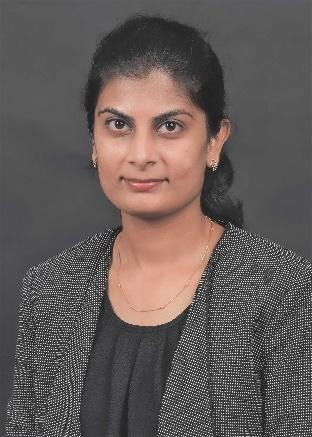
Keynote Speaker 2
Dr Dhivya Sampath Kumar, Assistant Professor, Singapore Institute of Technology
Talk Title: Distributed Energy Markets: Powering Flexibility, Transparency, and Prosumer Participation
Biography: Dr. Dhivya received her M.Eng. degree in Power Systems Engineering from the College of Engineering-Guindy, Anna University, India, in 2011 and her PhD degree in Electrical and Computer Engineering from the National University of Singapore (NUS) in June 2017. She also earned a graduate certificate in Management of Technology from NUS. She worked as a Post-Doctoral Research Fellow at the Solar Energy Research Institute of Singapore (SERIS)- National University of Singapore until Jan 2022. Since February 2022, she has been working as an Assistant Professor at the Singapore Institute of Technology. Her research interests include Modelling, Control, Optimization & Management of Microgrid/Smart Grids, Analysis of grid security, reliability and planning issues pertaining to embedded integrated distributed generators, Application of machine learning to power systems, and Optimal Integration and Management of DERs. She has worked on multiple projects with utilities and industries to analyze the impact of integrating renewable distributed generators on the reliability and protection of power networks.
She is also actively involved in IEEE Power & Energy Society (PES) activities and is currently serving as the executive committee member of the IEEE PES Singapore Chapter, Treasurer of IEEE Young Professionals Society Singapore, Technical committee member of IEEE IES Technical Committee on Transportation Electrification (TCTE). She is also an executive committee member in Women in Science and Engineering Research (WiSER) and Technical committee member of Climate Change in the Institution of Engineers Singapore (IES). She is a regular reviewer of IEEE and Elsevier journals and conferences and, has served in the organizing committee of flagship IEEE conferences.
Abstract: The rapid growth of distributed energy resources is reshaping how electricity is produced, traded, and managed. As power systems evolve toward decentralisation, distributed energy markets are emerging as a key enabler of flexibility, transparency, and active prosumer participation. This keynote explores how next-generation digital platforms, advanced forecasting, and peer-to-peer energy exchange models are transforming traditional grid operations. It highlights opportunities to unlock new value streams, enhance system resilience, and support national decarbonisation goals.
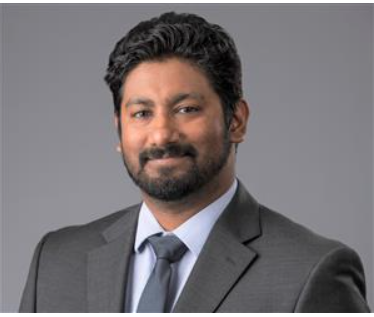
Keynote Speaker 3
SYED BAHAUDDIN ALAM, PHD, Appointed Committee Member, National Academies of Sciences, Engineering, and Medicine (NASEM), Named National AI Leader, UIUC’s White House National AI Action Plan (2025), Assistant Professor, University of Illinois Urbana-Champaign, USA
Talk Title: Towards Energy-Efficient Agentic Foundation Models: Reimagining Digital Twins for Energy Systems
Biography: Dr. Syed Bahauddin Alam is an Assistant Professor in the Nuclear, Plasma & Radiological Engineering department at the University of Illinois Urbana-Champaign (UIUC). Dr. Alam has been appointed as one of 11 National Committee Members on AI at the National Academies of Sciences, Engineering, and Medicine (NASEM). He was named the National AI leader in the University of Illinois' official response to the White House AI Action Plan (2025). He has also been selected/invited as one of ~100 Select Global Leaders by the Simons Foundation for AI Foundation Model research. He was a finalist for the Illinois Innovation Award (2024) for a scientific breakthrough in AI/Nuclear. His Nature Portfolio-published research on AI-powered digital twins for nuclear systems attracted extensive national and international media coverage as a “breakthrough”, and ranked in the top 5% of all research outputs scored by Nature Altmetric globally.
Abstract: Foundation models (FMs) offer a transformative approach to digital twins (DTs) in energy systems by enabling generalizable, compact, and energy-efficient AI that addresses the brittleness of conventional task-specific models. Current DTs often fail under sparse sensing, require costly retraining, and rely on power-hungry infrastructure, limiting their effectiveness in dynamic or constrained environments. This talk presents FM-enabled DTs enhanced with agentic AI for real-time field reconstruction, uncertainty quantification, and autonomous decision-making. Dr. Alam’s group develops neural-operator-based twins optimized for physical systems, capable of operating with millisecond latency and can potentially consuming less than 5 watts on edge devices. Agentic components enable these twins to sense, reason, and act within context, forming a continuous loop between data, interpretation, and control. This work supports DOE missions in clean energy, nuclear safety, and secure infrastructure by advancing digital twins from passive replicas to intelligent, resilient, and energy-aware systems ready for real-world scientific and operational deployment.
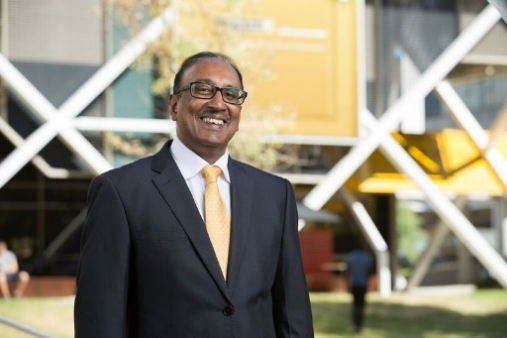
Keynote Speaker 4
Professor Syed Islam, FIEEE, FIET, FIEAust, CPEng, Associate Deputy Vice Chancellor for IRP, Advisor to the Vice Chancellor on New Energy, Federation University Australia
Talk Title: Model Predictive Control for Microgrids: From power electronic converters to energy management
Biography: Syed M Islam is currently the Associate Deputy Vice Chancellor for International Research Partnerships and Advisor to the Vice Chancellor on New Energy at Federation University Australia. He was previously the Associate Deputy Vice Chancellor (Research) and the Executive Dean for the Institute of Innovation Science and Sustainability at Federation University Australia. He is also the founding Director of the Centre for New Energy Transition Research at Federation University. He received the IEEE T Burke Haye’s Faculty Recognition award in 2000. He received the Curtin University inaugural award for Research Development in 2012. He received the Sir John Madsen medal in 2011 and 2014 for best electrical engineering paper in Australia. He was awarded the Distinguish Professor title in 2024 at Federation University. He has published over 400 technical papers in his area of expertise. His research interests are in Distributed Energy Resources, Condition Monitoring of Transformers, Wind Energy Conversion, and Smart Power Systems. He has received over $25M in research funding from the Australian Research Council, Qatar Foundation, The Research Council of Oman, various industry and government agencies.
Abstract: Microgrids have emerged as a promising solution for autonomous operation of DER connected electricity networks either in standalone or grid connected mode for improved economics, reliability and flexibilities. But the intermittency of renewable power generations has complexities of fluctuations of demand-supply, frequency, voltage and grid stability issues while connected to grid. Synthetic inertia or virtual inertia are sought after due to dwindling rotating mass related inertia in the system particularly as we embark on an era of hundred percent renewable based electricity systems. Inverter based systems (IBRs) whether in grid forming or grid following mode are increasingly made responsible to supply frequency and voltage references, inertial and voltage support. Simple PID controllers are not good enough for thisincreased and complex functions from performance point of view. Model Predictive Controls are one way of solving the complex nature of the problems. In this talk, we will focus on the control hierarchical structure and how MPCs can improve the overall performance in the operation of a controlled microgrid.
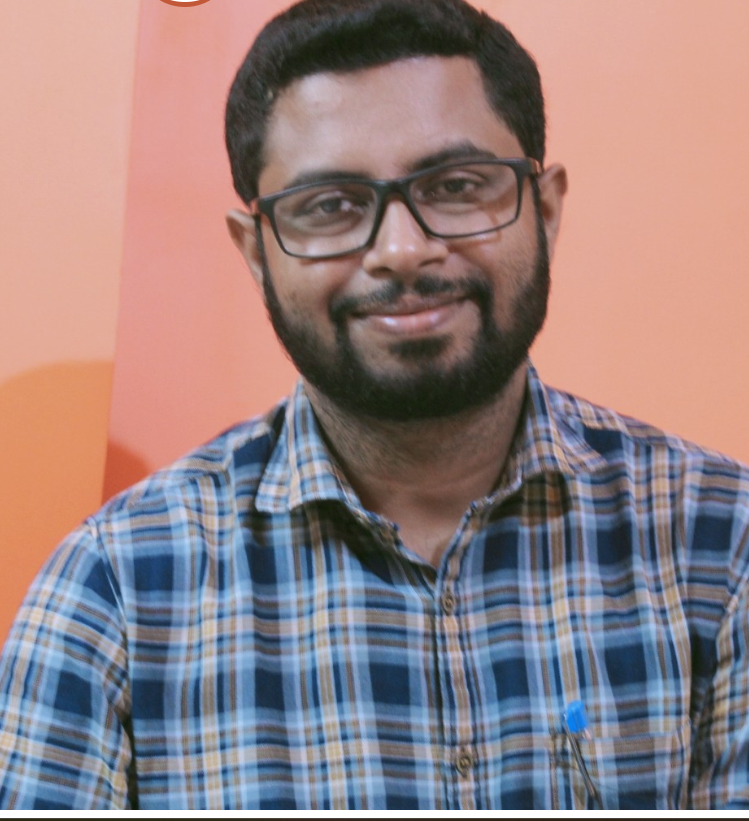
Day 2 Workshop Speaker, 4.30 pm to 6 pm, Dec 5, 2025
Dr. Tanmoy Roy Choudhury, Asst. Prof, Department of EE, NIT Rourkela, Odisha, India
Talk Title: Digital Twin Technology in Power Electronics and Smart Grid – a step towards RE integration
Biography: Dr. Roy Choudhury is a Senior Member of IEEE and presently working as an Assistant Professor, NIT Rourkela since 2023. After his graduation from NIT Agartala, he joined JK Tyre & Industries Ltd. and served there for 1 year. Post that pursued M. Tech from the same institute with getting an opportunity to join KIIT Deemed to be University in the year 2012. Serving there till 2023 with a major in Electrical Engineering. During this course, he has completed his Ph.D. degree in 2018 with an ample number of Publications. Major publications are in IEEE Transactions on Industrial Electronics, Springer, Elsevier, Wiley Journals. To date, more than 35 publications were possible including Journal and Conferences. Apart from that membership also attained in various Professional societies viz. IET, IE(I) & ISCA. Chartered Engineer (C. Eng.) from IE(I) is an added feature to his career. He is an enthusiast who works with a team and as such a skill, he has organized IEEE Conferences named 6th IEEE WIECON-ECE 2020, in collaboration with IEEE Bhubaneswar Subsection and IEEE Bangladesh Section during December 2020 1st IEEE ICIDeA 2022 during 15 - 16 October 2022. His major accomplishment is through forming IEEE Industrial Electronics Society being the Founder Chair and IEEE Consumer Technology Society is one of the initiators, both under Bhubaneswar Jurisdiction. He is very actively involved in IEEE activities like local level programs, webinars, PES HAC, etc. He also serves as the Exe Com member to the IEEE Bhubaneswar Subsection and was also selected for IEEE PES HTPDC global Exe Com member. Additionally, he is also appointed as the Secretary, IEEE PES HAC 2021-23.
Abstract: The rapid growth of renewable energy (RE) deployment presents significant challenges for modern power systems, including intermittency, power-quality issues, and increasingly complex grid dynamics. Digital Twin (DT) technology has emerged as a transformative tool capable of addressing these challenges by creating high-fidelity virtual replicas of physical power-electronic converters, distribution networks, and smart-grid assets. By enabling real-time monitoring, predictive analytics, and advanced control strategies, DTs enhance the reliability, flexibility, and efficiency of RE-integrated power systems. This topic explores the application of Digital Twin technology in power electronics and smart-grid environments, highlighting its role in forecasting system behavior, optimizing converter operation, enhancing fault detection, and supporting grid-stability management under high RE penetration. The integration of DTs with data-driven models, IoT sensing, and AI-based optimization further strengthens their capability to manage variability from solar and wind resources. Overall, Digital Twin technology represents a pivotal step toward achieving resilient, intelligent, and renewable-centric electricity networks, accelerating the transition to a sustainable energy future.



 _
 _