Invited Speaker – 1
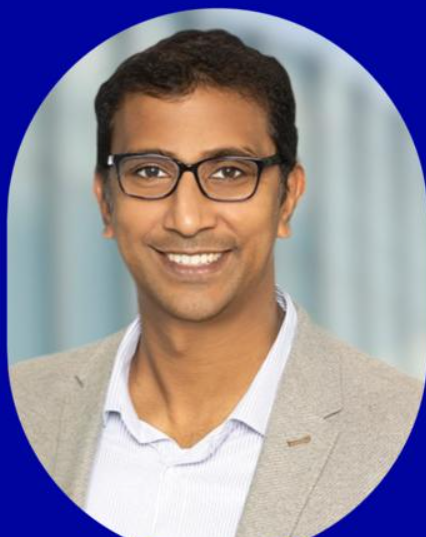
Dr. Nishad Mendis
IEEE IAS Education Department Chair/ Business Unit Manager Renewable Advisory Bureau Veriats, Australia
Title: Powering Australia’s Clean Transition: The Pivotal Role of BESS
Abstract:
Energy storage technologies are playing a central role in shaping Australia’s future energy landscape. As renewable energy penetration accelerates across the National Electricity Market (NEM), utility-scale battery storage, long-duration assets, and flexible market frameworks are becoming vital for system reliability and economic sustainability. This presentation delivers a strategic overview of key energy storage technologies driving Australia’s net-zero transition, examining the market mechanisms, regulatory reforms, and investment models required to monetize storage while de-risking grid decarbonization.
Bio:
Nishad Mendis is an experienced professional in the energy sector with over 18 years of experience. Currently serving as the Business Unit Manager-Renewables at Bureau Veritas in Australia, he spearheads efforts to drive energy transition strategies. His impressive career trajectory includes roles such as Senior Electrical Engineer at DNV, Solution Engineer at Eltek, and Design and Commissioning Engineer for HV substations at Alstom Grid. He holds a PhD from the University of Wollongong, Australia, and a Bachelor of Electrical Engineering with honors from the University of Moratuwa, Sri Lanka. He further enhanced his expertise with an MBA in Global Sustainable Management from Anaheim University, USA. His professional recognition includes being a Senior Member of IEEE, holding NER credentials, and serving as an Executive Board member of the IEEE Industrial Applications Society. Additionally, he is an Honorary Fellow at Deakin University’s School of Electrical Engineering.
Invited Speaker – 2
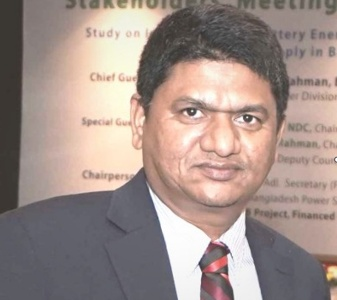
Dr. Ahmed Y. Saber, SMIEEE
Visionary Leader of AI and Optimization
Title: Empowering Power Engineers with ETAP Electrical AI Copilot
Abstract
This invited presentation introduces ETAP Electrical AI Copilot, an AI-powered engineering assistant that combines Large Language Models (LLMs) with power system simulation engines, engineering standards, technical documentation, and project-specific context to transform the way power engineers design, analyze, and operate modern electrical power systems. The talk demonstrates how natural language interaction with engineering software enables engineers to automate routine tasks, interpret simulation results, generate technical reports, and make faster, more informed decisions. Real-world examples highlight how AI enhances engineering productivity, improves workflow efficiency, and supports reliable engineering practices while maintaining engineers in the decision-making loop. The presentation also discusses emerging trends, challenges, and future opportunities for deploying trustworthy AI in mission-critical power and energy applications.
Bio
Ahmed Saber received his Ph.D. from the University of the Ryukyus, Japan, in 2007. He is currently the Vice President of Optimization and AI at ETAP R&D, USA, where he contributions to AI-driven methods, products, and systems for power system prediction, optimization, efficiency, sustainability, and operator assistance through large language models (LLMs). He currently serves as the Chair of the IEEE Orange County Section in California. His pioneering research led to a novel deep learning-based model that improved load forecasting accuracy, CO2 estimation, efficiency, and operator support for power system optimization and sustainability.
Recently, he introduced an AI-powered Electrical Copilot, an assistive intelligence system that enhances grid operator decision-making by providing real-time diagnostics, fault detection, and predictive maintenance, improving grid resilience and reducing downtime. It has generated significant interest among power system engineers, students, and researchers. His patented AI tools are widely used in power industries all over the world.
Dr. Saber’s research has received national and international funding, including support from the U.S. Department of Energy (DoE). In recognition of his contributions to smart grid technologies, he was honored with the IEEE Outstanding Engineer Award in Southern California, OC Section (2012) among more than 4,000 engineers. He received the Best Paper Award at IEEE ICEEICT 2018 for his outstanding research in AI and PV. He also received the ETAP Leadership Award in 2017 for his excellence in power system modeling, optimization, and AI-driven advancements, further solidifying his leadership in the industry.
He has significantly contributed to the power industry through patents, technical publications, conference presentations, benchmark systems, keynote speeches, tutorials, and workshops. With over 100 technical publications and four patents on AI applications for power systems, his expertise spans AI/ML for power systems, smart grids, digital twin, energy storage, renewables, AI/ML data center, power system forecasting and optimization, cybersecurity, real-time systems, and operations research.
Invited Speaker – 3
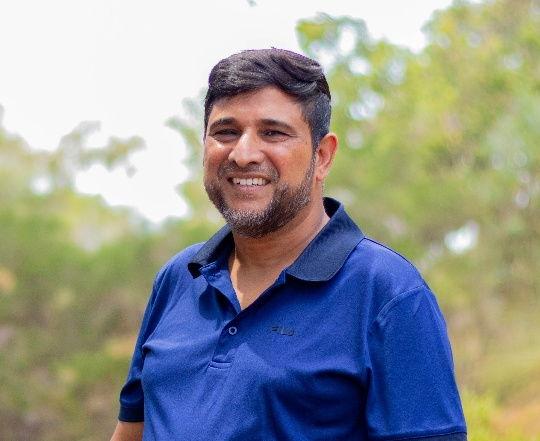
Prof GM Shafiullah
School of Engineering and Energy, Murdoch University, Perth, Australia
Title: Research in Energy Sustainability and Industrial Transformation
Abstract:
The global transition towards low-carbon energy systems is driving the need for reliable, affordable, and sustainable power solutions that can support deep decarbonisation while maintaining energy security. Variable generation from renewable energy sources creates challenges for system stability and supply-demand balance, making battery and hydrogen-based storage essential for resilient renewable energy systems. This talk presents our current research on renewable energy integrated microgrids for remote, rural, and regional communities, focusing on energy storage to improve reliability, resilience, and operational flexibility. This research also examines large-scale renewable energy integration using innovative smart technologies to address the key technical, economic, social, and environmental challenges of the energy transition. By enabling clean, decentralised, and community-focused energy solutions, this research offers practical guidance for power utilities, Indigenous service providers, industries, and government agencies planning sustainable microgrids for regional energy access and decarbonisation.
BIO
GM Shafiullah is a Professor of Electrical Engineering at Murdoch University. GM’s research interests include power systems stability, renewable energy and its enabling technologies, microgrid, smart grid, green hydrogen, and sustainability in the energy sector. He has co-authored over 200 publications, including book chapters, journal articles, and conference papers. His work has earned him an h-index of 57 and over 14500 citations, placing him among the top 2% of scientists worldwide from 2020 to 2025, according to Stanford University. He also selected as the top performing researcher in the field of Sustainable Energy in 2025 by the Australian Research Magazine. In addition to eighteen HDR completion, GM is currently supervising seven HDR students and extensively involved in a number of projects that include Sustainable Agrivoltaics Systems for Rural and Remote Islands, Hydrogen-enabled Standalone Power Systems, Water Smart Farms, Hybrid Solar PV-Battery-Hydrogen System for Microgrid Development in Regional WA; EV Charging Strategies for Voltage Regulation and System Strength Enhancement; Battery Swapping Station; Investigation of cyber-attack impact in power systems; Translating Sustainable Development Goals (SDGs) into national energy supply and demand. GM has also worked on industrial and consultancy projects regarding power systems reliability and stability, energy transition and decarbonisation, securing over $10.0M in research funding. GM is a senior member of IEEE and IEEE PES and serves as Associate Editor for IET Renewable Power Generation, Smart Grid – Frontiers in Energy Research, and Energies and Infrastructure, MDPI.
Invited Speaker – 4
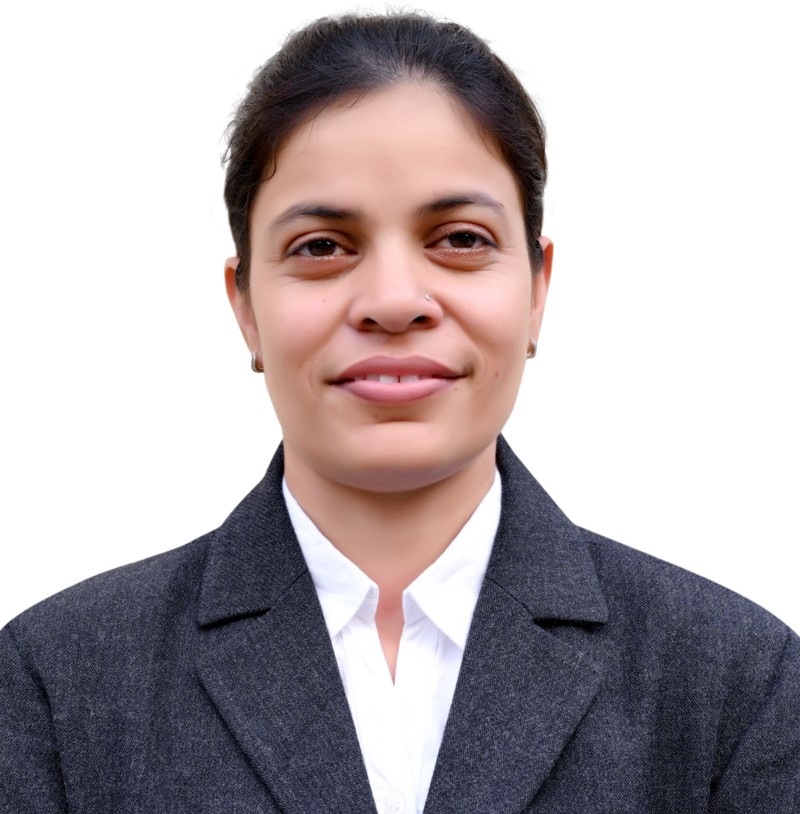
Dr. Ravita Lamba
Assistant Professor
Department of Hydro and Renewable Energy
Indian Institute of Technology Roorkee
Title: Learning-Based Predictive Energy Management Framework for Multi-Source DC
Microgrids
Abstract
The increasing integration of renewable energy sources and storage units in DC microgrids has introduced significant challenges in maintaining reliable and optimal energy management under varying conditions. This research proposes a machine learning–assisted model predictive control (ML-MPC) framework for a multi-sourced DC microgrid incorporating photovoltaic, wind, battery, and hydrogen systems. The model predictive controller (MPC) is designed to manage nonlinear converter dynamics, coordinate power flow among distributed components, and ensure stable DC bus voltage. To enhance predictive accuracy, a machine learning layer is embedded within the MPC to forecast short-term variations in renewable generation and load demand. This hybrid control strategy enables adaptive decision-making and real-time optimization, improving the system’s efficiency and resilience against uncertainties. The proposed ML-MPC model aims to contribute toward intelligent, sustainable, and scalable energy management solutions for future community-based DC microgrids.
Bio
Ravita Lamba is working as Assistant Professor in the Department of Hydro & Renewable Energy at IIT Roorkee. Prior to this, she worked as Assistant Professor at MNIT Jaipur and NIT Delhi. She has been awarded Distinguished Lecturer position for the year 2026-2027 by the IEEE Industry Applications Society. She has also been awarded the Scientific High-Level Visiting Fellowships (SSHN) 2025 by the French Institute in India (IFI)/Embassy of France in India. She has been granted the Indo-German Bilateral Workshop sponsored by IGSTC. She is actively involved in the research fields including Solar Photovoltaic & Thermal Systems, Thermoelectric Devices, Energy Management, Modeling & Optimization of Energy Systems, Battery Thermal Management, Building Integrated PV Systems and Radiative Cooling Systems. She has published 100+ research papers in peer reviewed journals including 07 book chapters and international conferences and one book titled “Thermoelectrics Energy Systems: Modeling and Applications”. She has been awarded “IEI Young Engineers Award 2025-26” in Electrical Engineering discipline by The Institution of Engineers (India)-IEI and “SGSITS National Award for Best Research Work done by Young Teachers of Engineering Colleges” for 2024 by Indian Society for Technical Education-ISTE, “Distinction in Doctoral Research Award” for the PhD research work for the year 2018 by IIT Delhi. She was a visiting fellow at the University of Exeter, United Kingdom through SERB International Research Experience (SIRE) fellowship for year 2022-2023 awarded by DST & at the University of South Florida, FL, USA through BHAVAN Fellowship for year 2017-2018 awarded by DST & IUSSTF. She has carried out research projects funded by GIZ, DST and SPARC.
Invited Speaker – 5
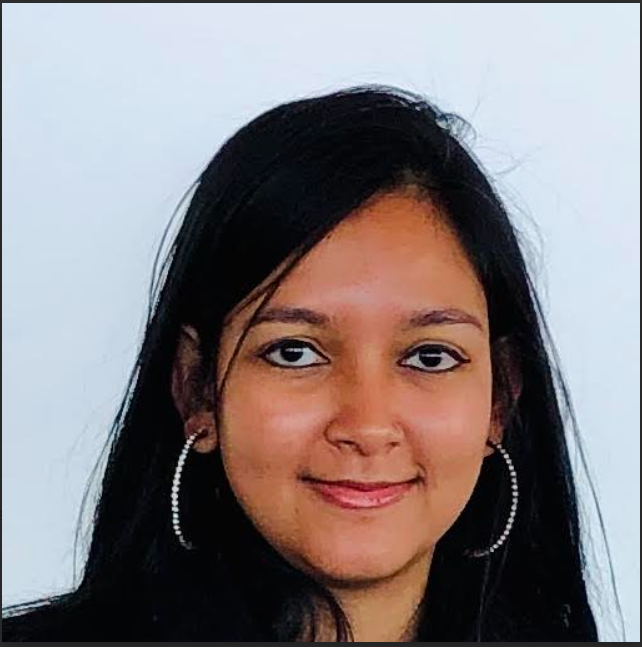
Dr. Shama Naz Islam
Associate Professor in Electrical Engineering, Deakin University, Australia
Title: Residential Energy Management: A pilot implementation case study in Geelong
Abstract:
A pilot demonstration of an energy management prototype has been undertaken in Geelong, Victoria to optimise energy consumption for a number of households. The aim is to maximise the utilisation of solar generation to meet the electricity demand of the household appliances. The developed prototype allows end users to optimally use appliances, and improves their energy efficiency and in effect, reduces energy bills. The prototype includes Raspberry Pi microcontrollers and smart plugs, which uses the home Wi-Fi network to execute the appliance on/off operation according to the designed energy use optimisation algorithm. Based on a trial between March-May 2022, on an average, up to 38.8\% savings in energy consumption and up to 48\% savings in peak demand were observed.
Bio
Dr Shama Naz Islam is an associate professor in Electrical Engineering at Deakin University. She completed her PhD in 2015 from ANU. She is performing research in energy management, peer to peer energy trading and energy data analytics. She has investigated a number of industry-based projects in battery storage and intelligent monitoring of distribution network funded by ARENA and Victorian Government. Her developed prototype for residential energy use optimisation has received the ‘Best Innovation in Energy Management’ award from Energy Efficiency Council in 2023. She has achieved Future Women Leaders Award from Monash University in 2017 and Women of Colour awards (Technology Trailblazer) in 2024.


 _
_  _
_